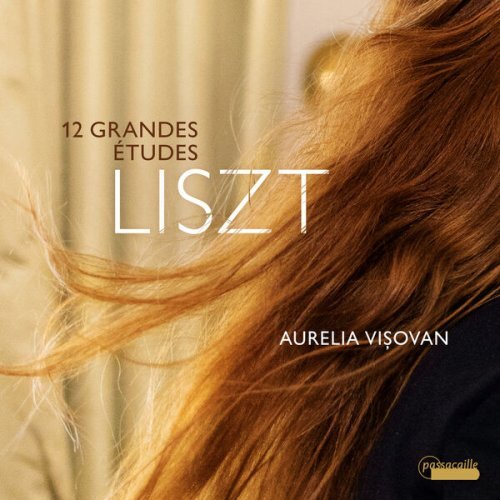
Artist: Aurelia Visovan

Liszt: 12 Grandes Études, S. 137
Year Of Release: 2026
Label: Passacaille
Genre: Classical
Quality: FLAC (tracks)
Total Time: 01:23:21
Total Size: 1.80 GB
Tracklist:
1. 12 Grandes Études, S. 137: No. 1 in C Major. Presto (1:08)
2. 12 Grandes Études, S. 137: No. 2 in A Minor. Molto vivace (3:19)
3. 12 Grandes Études, S. 137: No. 3 in F Major. Poco adagio (6:09)
4. 12 Grandes Études, S. 137: No. 4 in D Minor. Allegro patetico (7:06)
5. 12 Grandes Études, S. 137: No. 5 in B-Flat Major. Egualmente (4:51)
6. 12 Grandes Études, S. 137: No. 6 in G Minor. Largo patetico (6:19)
7. 12 Grandes Études, S. 137: No. 7 in E-Flat Major. Allegro deciso (6:41)
8. 12 Grandes Études, S. 137: No. 8 in C Minor. Presto strepitoso (9:23)
9. 12 Grandes Études, S. 137: No. 9 in A-Flat Major. Andantino (12:15)
10. 12 Grandes Études, S. 137: No. 10 in F Minor. Presto molto agitato (6:59)
11. 12 Grandes Études, S. 137: No. 11 in D-Flat Major. Lento assai (11:26)
12. 12 Grandes Études, S. 137: No. 12 in B-Flat Minor. Andantino (7:54)
This is an extremely important Liszt album by Aurelia Visovan, a Romanian composer who won the fortepiano category at the 2019 International Competition for Early Music in Bruges, renowned as "the world's most prestigious early music competition."
The piece featured is the "12 Grand Etudes S.137 (1837 version)," the direct source of the famous "Etudes Transcendentales S.139 (1852 version)." This extremely difficult version was described by Schumann as "an exercise of storm and terror" and "there are probably only 10 or 12 people in the world who can play this piece." The greatest feature of this album is that it is the world's premiere recording of this work on period instruments. While there have been several recordings on modern pianos, no one has attempted this difficult piece on the instruments of the time.
The instrument used in this performance is a restored 1873 Steingraeber, housed in the Rococo Salon of the Steingraeber House in Bayreuth, a place associated with Liszt. In his later years, Liszt frequently visited Bayreuth to visit his daughter Cosima and son-in-law Richard Wagner, and he played this very piano many times in this salon, for friends and acquaintances, and occasionally in public. This is a rare recording, captured in a historic room adorned with original photographs of Liszt himself, capturing the sound of the instrument as Liszt himself played it.
Historical interest is not the only reason Wichovin chose this period instrument over a more modern one. The 1837 edition of the score features Liszt's unique performance markings (such as tempo fluctuations and lines indicating "stops" shorter than a fermata) that were omitted in later editions. She says that these delicate Romantic nuances can be more naturally expressed with the decaying tones and touch of period instruments than with modern pianos.
Although Liszt considered this work to be perfect, its extreme difficulty forced revision. This "true virtuoso" is vividly brought to life on the instruments that Liszt knew so well.
The booklet includes photos of the instruments and track descriptions with musical examples.
*Recorded: February 27–March 2, 2025, at the Steingraeber Haus (Bayreuth, Germany)
(Tokyo M Plus)








 )
)





 ADD or Hide Comments